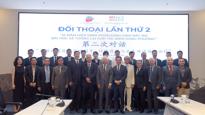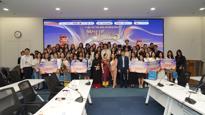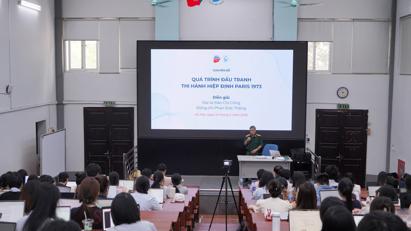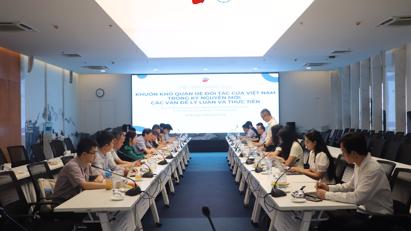


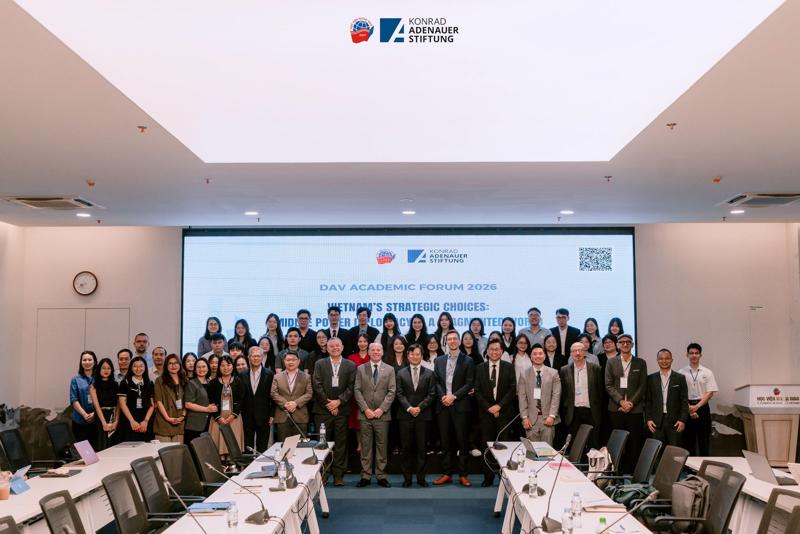
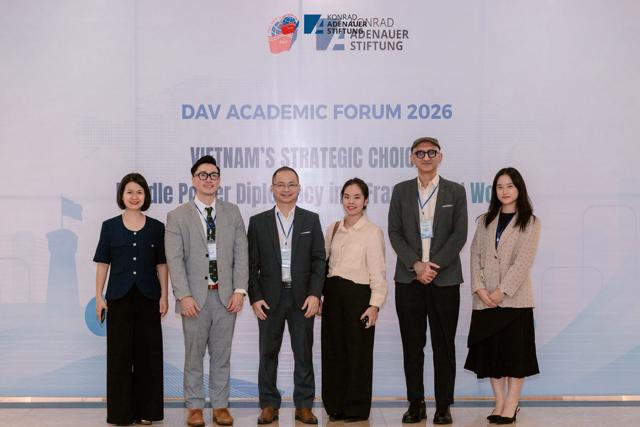
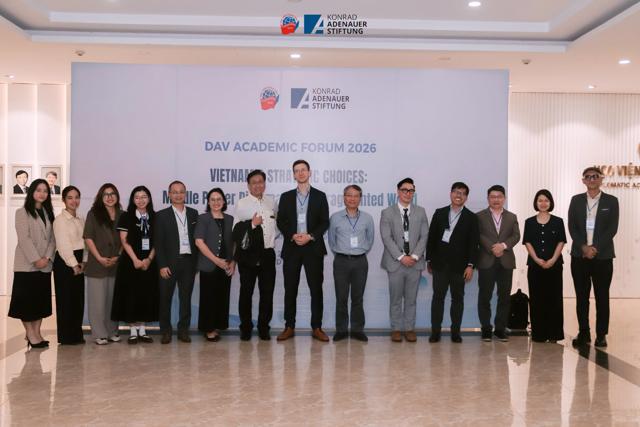
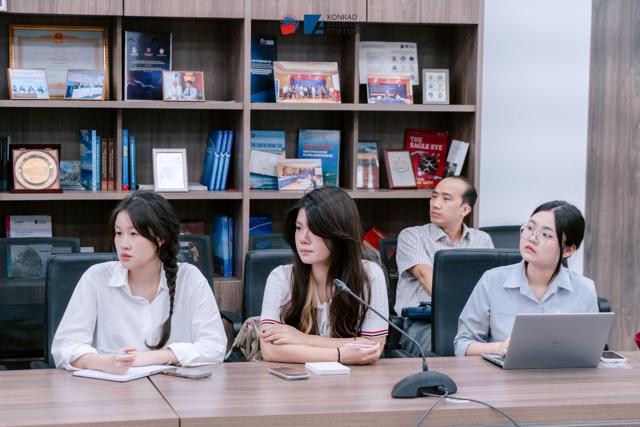
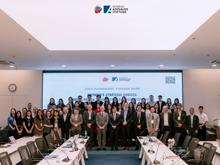
The conference brought together international relations experts from the Academy and leading scholars from Singapore, Canada, Malaysia, the Philippines, and Germany, alongside a large number of the Academy's faculty and students. Participants discussed the role of middle powers within a fragmented world order, as well as Vietnam’s position and strategic choices as a middle power amidst this landscape.
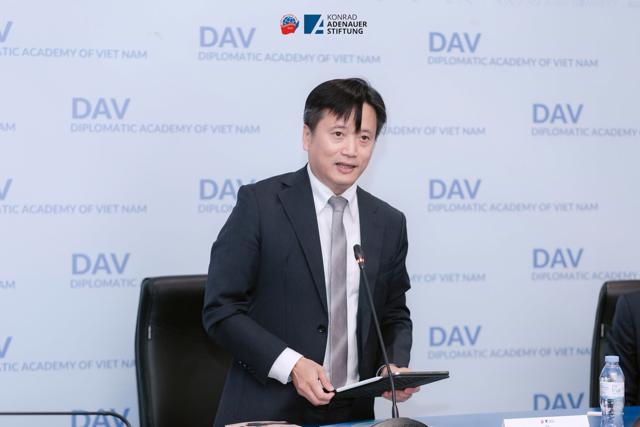
In their opening remarks, Dr. Nguyen Hung Son, President of the Diplomatic Academy of Vietnam, and Mr. Lewe Paul, Representative of KAS Vietnam, highlighted the conference's core focus: the unprecedented attention currently directed at the role of middle powers in an increasingly fragmented world, alongside the question of whether Vietnam is—or should identify as—a middle power.
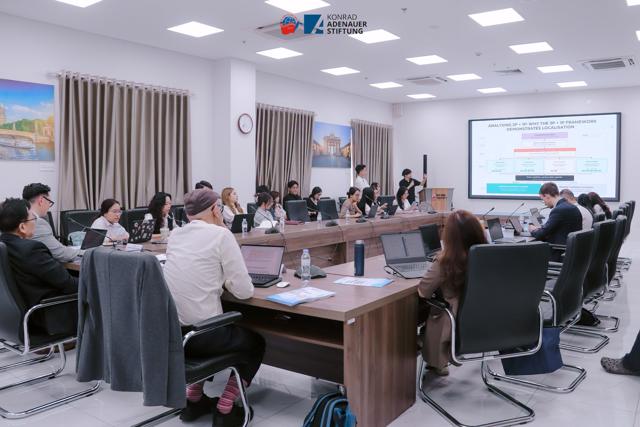
In the Geneva Room, discussions progressed from positioning Vietnam along the "emerging vs. established" spectrum to the interplay between hedging and niche diplomacy, comparative analyses with other nations, energy transition prospects, and Vietnam's role in ASEAN-led multilateralism. Scholars emphasized that classical middle-power theory requires updating to reflect the current landscape of great-power competition; they noted that middle-power status is relative rather than absolute, implying that Vietnam would struggle to exert systemic influence if acting in isolation rather than aligning with other middle powers.
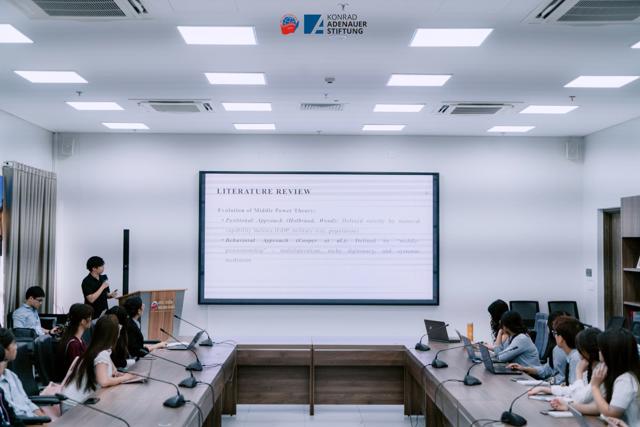
Meanwhile, sessions in the Berlin Room covered a wide range of topics, including middle-power strategies amidst great-power rivalry, economic autonomy, technology diplomacy, digital governance, and normative issues. Participants offered valuable insights, such as the need to clarify concepts, precisely define research scopes and objectives, utilize independent sources to assess middle-power status, and prioritize national agency. Scholars also proposed recommendations for the ethical application of AI within academic contexts.
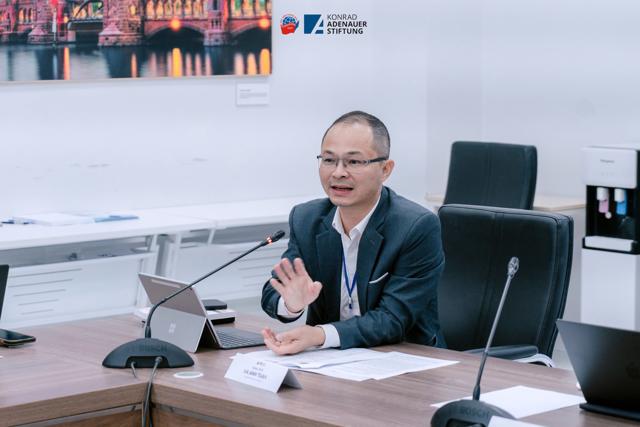
In their concluding remarks, representatives from DAV and KAS summarized five key research lessons for young scholars: identifying the right knowledge gaps; formulating clear research questions; clarifying variables and causal mechanisms; rigorously justifying case study selections; and ensuring transparency in data collection. The overarching message was that while Vietnam possesses the capacity and identity to be recognized as an emerging middle power, it must foster cooperation and maintain continuous dialogue with the international community to exert genuine systemic influence.
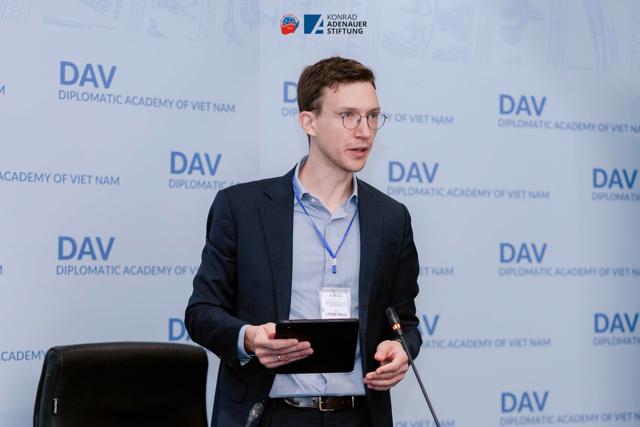
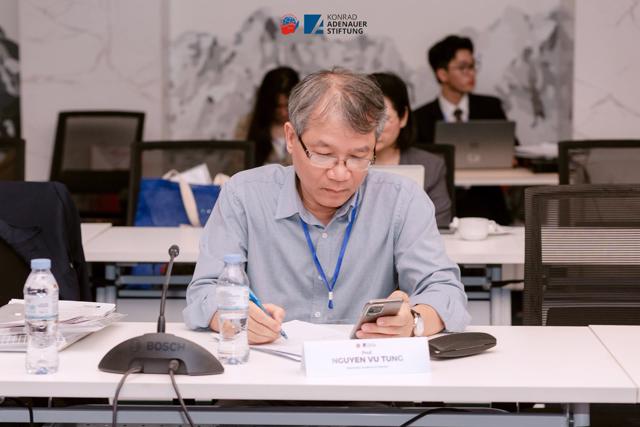
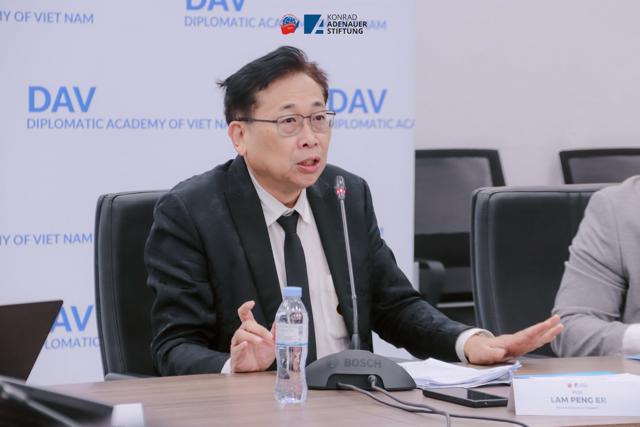
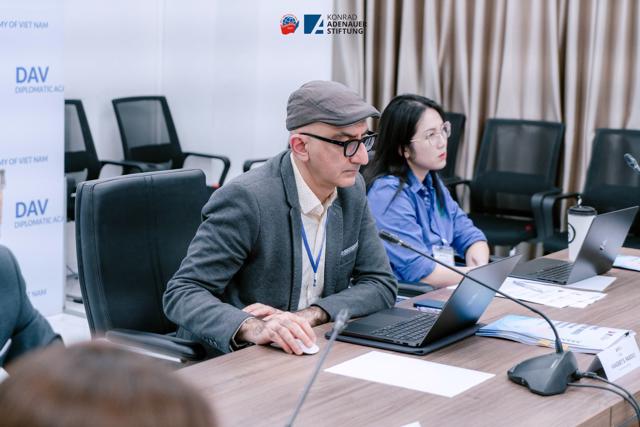
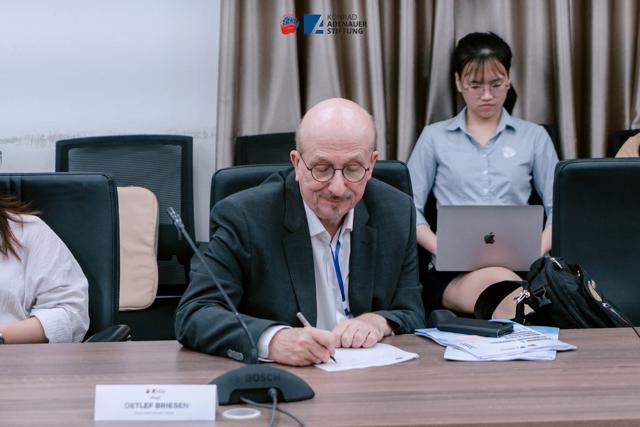
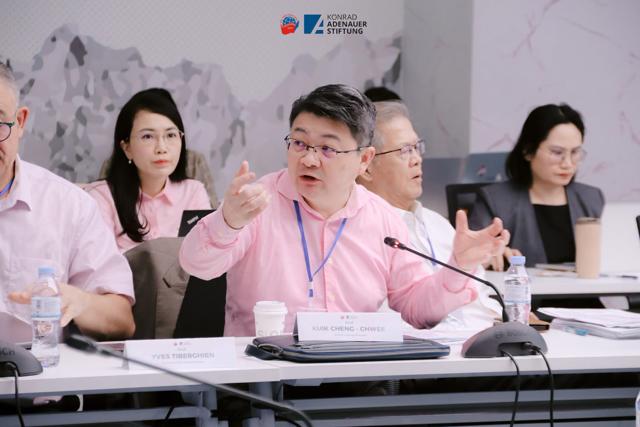
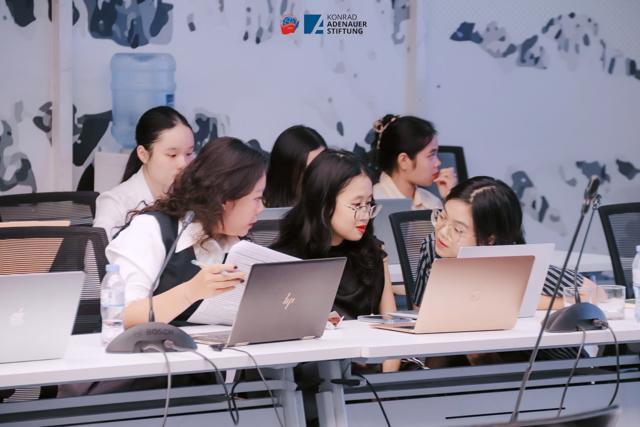
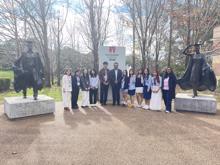
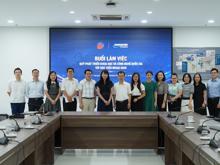
Photos from the conference:

Copyright ® 2026 Học viện Ngoại giao - Diplomatic Academy of Vietnam | Điều kiện | Bảo mật