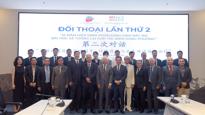


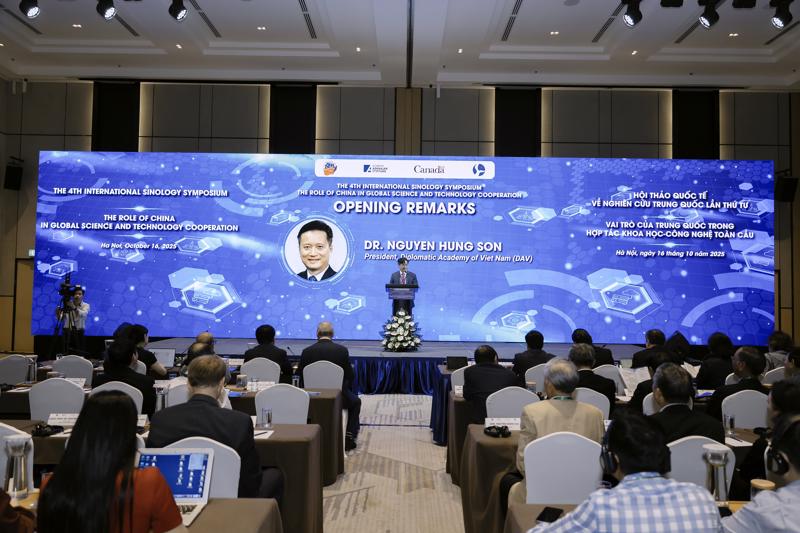
The Symposium served as a platform to exchange views and deepen understanding of China’s science and technology (S&T) development, while identifying opportunities for cooperation between China and other countries, including Viet Nam.
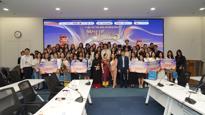
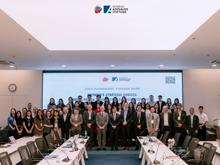
The event brought together nearly 130 participants, including experts, scholars, and policymakers specializing in Sinology; leaders and former leaders of Vietnamese research institutions and ministries; and representatives of diplomatic missions in Viet Nam.
In his opening remarks, Dr. Nguyen Hung Son, President of DAV, highlighted that China has made remarkable progress in science and technology, shifting from a latecomer learning to an active innovator at the global frontier. He emphasized that China’s growing technological capacity has become a key topic of global interest, calling for deeper, multidimensional, and long-term research.
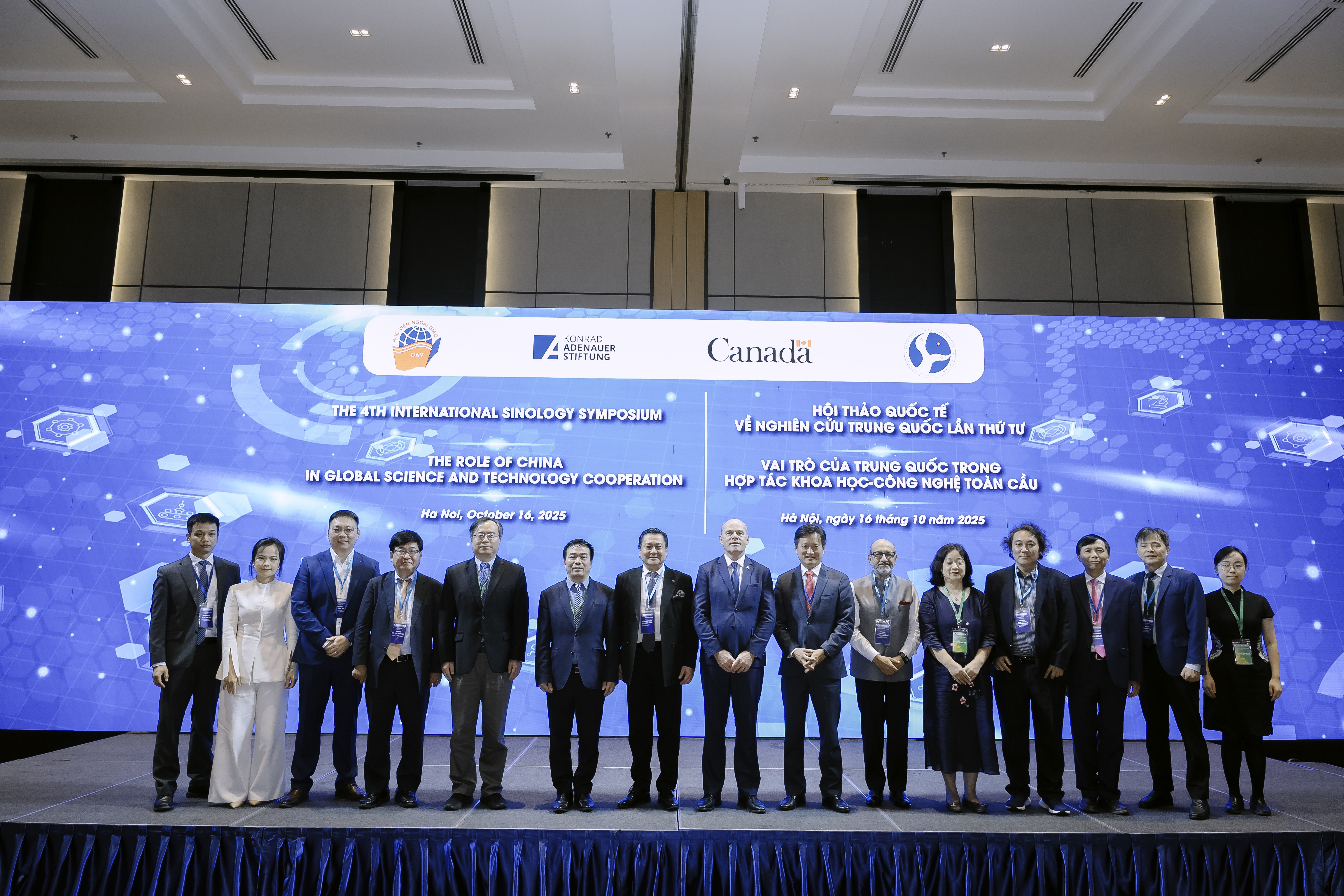
In their welcome remarks, Dr. Nguyen Xuan Cuong, Director-General of the Institute for Asia–Pacific Studies under the VASS; Mr. Lewe Paul, Resident Representative of KAS in Viet Nam; and Canadian Ambassador to Viet Nam James Nickel, underscored the significance of the Symposium in enhancing understanding of China and promoting regional and global cooperation.
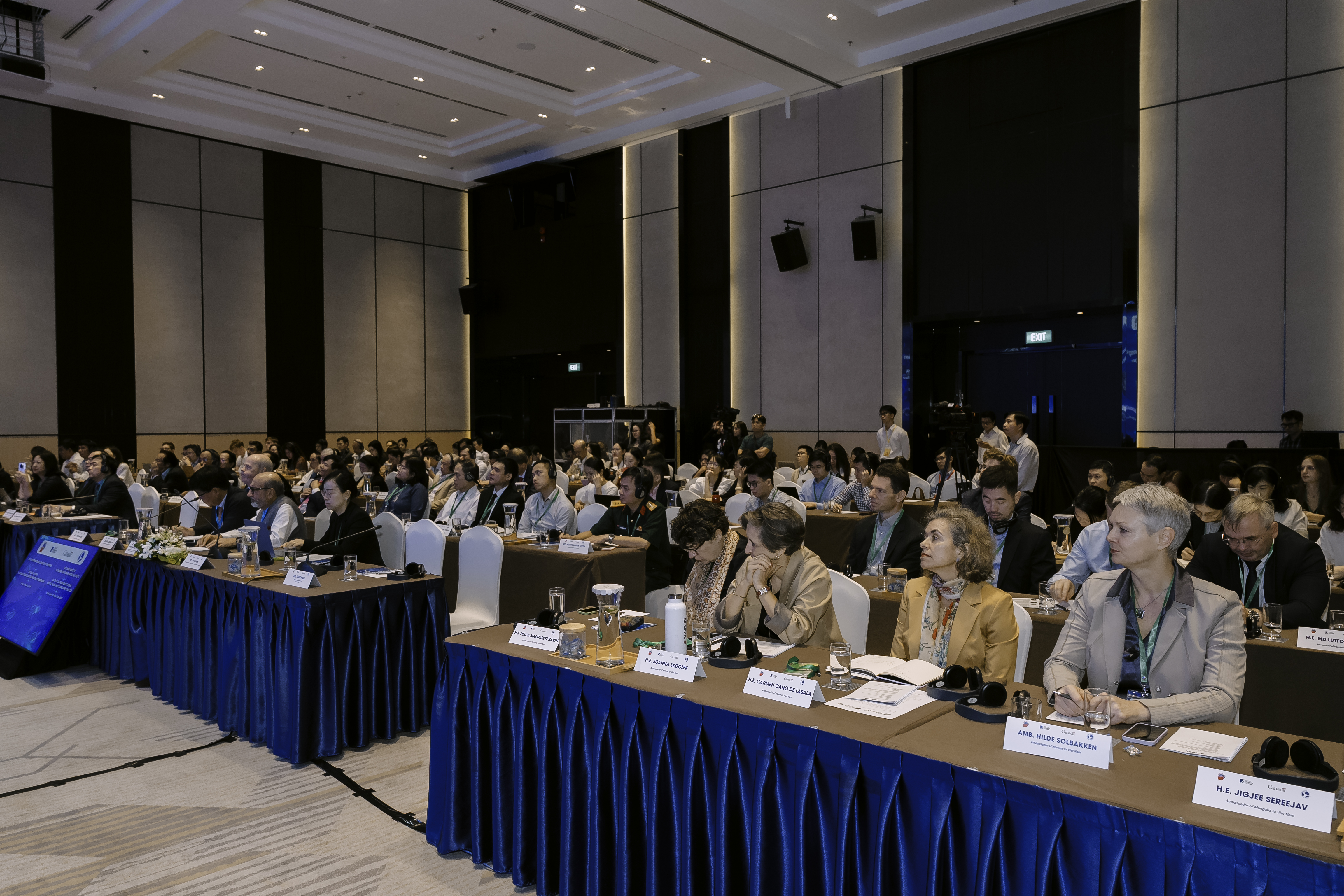
Over the course of the day, the Symposium featured lively exchanges with two keynote addresses and three panel sessions, discussing China’s S&T strategies, their role in advancing the country’s global standing, and prospects for future collaboration.
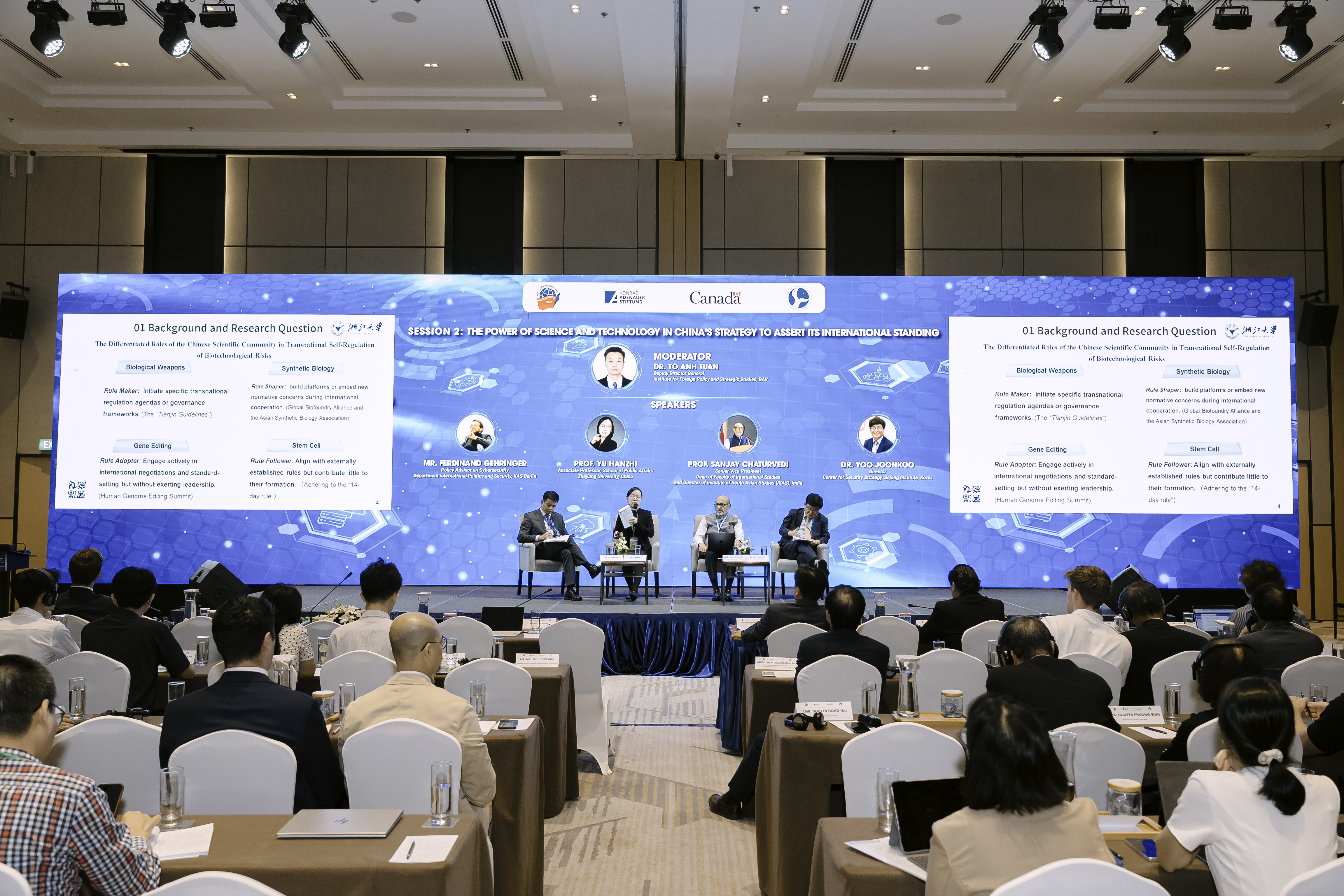
The keynote sessions featured speeches by Mr. Nelson Wong, President of the Shanghai Center for RimPac Strategic and International Studies, and Professor Kerry Brown, Director of the Lau China Institute at King’s College London. The speakers offered insightful analyses of China’s cultural, institutional, and policy foundations for technological advancement, as well as its potential for cooperation with other nations.
The Symposium concluded with lively and in-depth discussions, offering a comprehensive look at China’s science and technology development and its implications for global cooperation in the years ahead./.



Copyright ® 2026 Học viện Ngoại giao - Diplomatic Academy of Vietnam | Điều kiện | Bảo mật