


Educational quality has long been a cornerstone of the Diplomatic Academy of Viet Nam (DAV)’s development, underpinning its mission to "train high-quality human resources; advance the Viet Nam’s international integration; conduct research and strategic forecasting; and disseminate knowledge in ways that serve both the diplomatic sector and the broader needs of society while meeting the evolving and diverse needs of the labour market and upholding the interests of the nation and its people."
In line with this mission, the accreditation of eight undergraduate programmes by FIBAA (Foundation for International Business Administration Accreditation) marks a significant milestone, reflecting the DAV’s continued efforts to align its programmes with international standards and to strengthen its role in the global academic community.
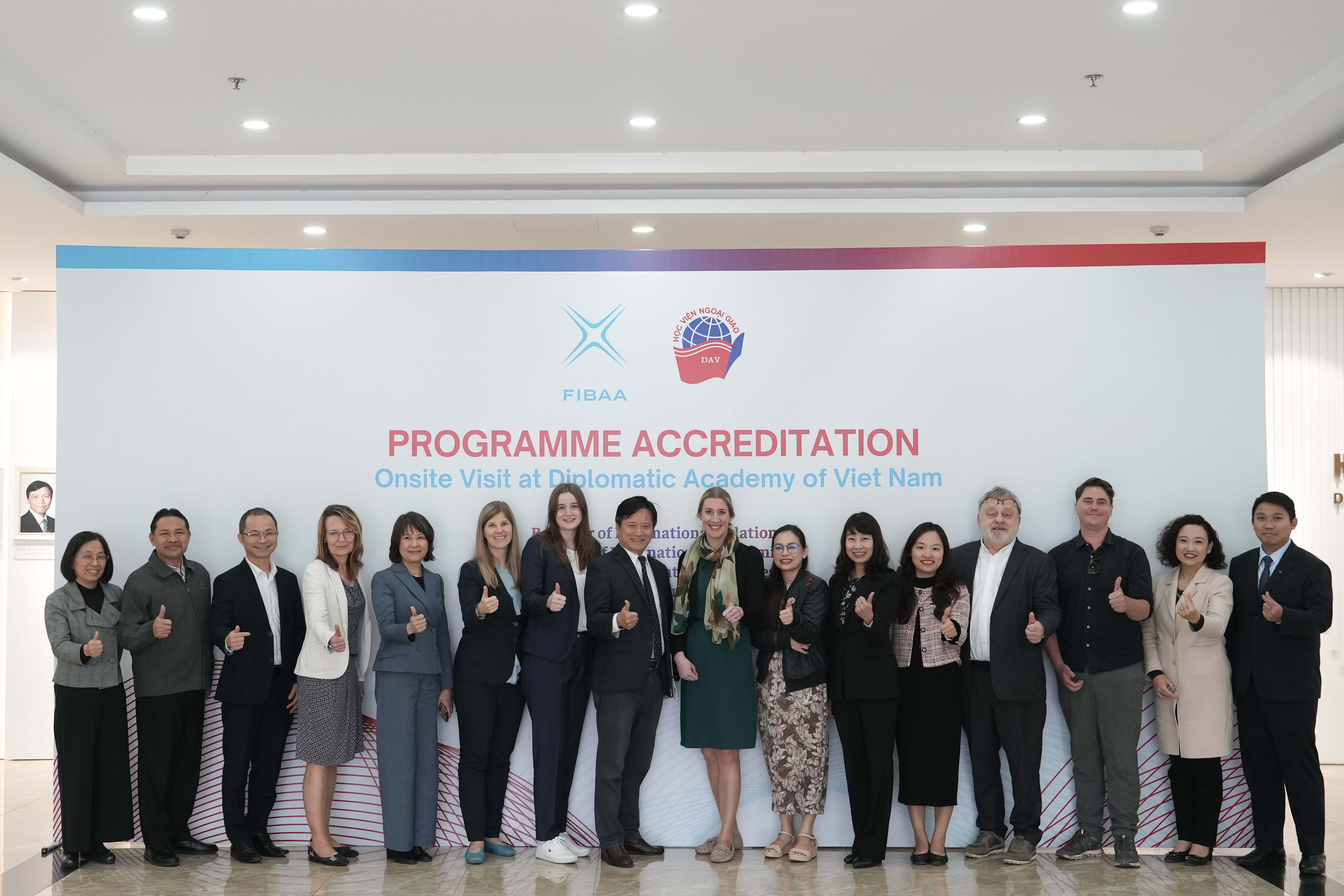
The programmes awarded FIBAA accreditation include: International Relations, International Economics, International Business, International Law, International Trade and Business Law, English Language Studies, International Communication, and Asia-Pacific Studies (consisting of American, Chinese, Japanese, and Korean Studies).
These programmes underwent a comprehensive evaluation under FIBAA’s rigorous quality framework, covering key dimensions such as programme design and intended learning outcomes, their alignment with labour market needs, academic positioning and internationalisation, teaching and learning approaches, academic staff, programme management, learning resources, student support services, and internal quality assurance.
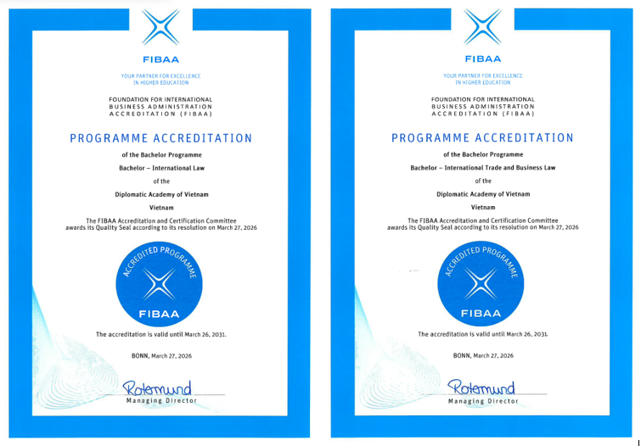
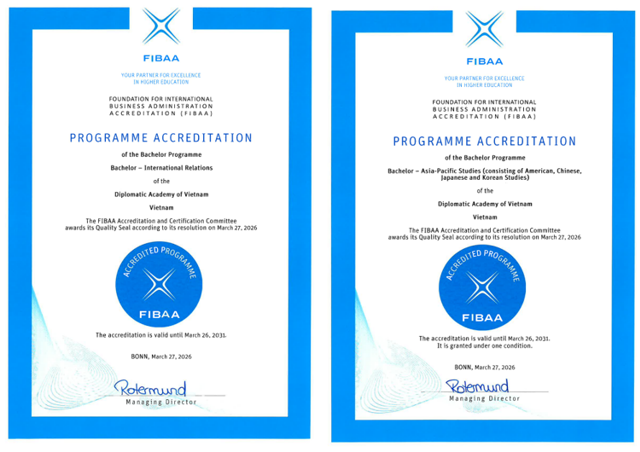
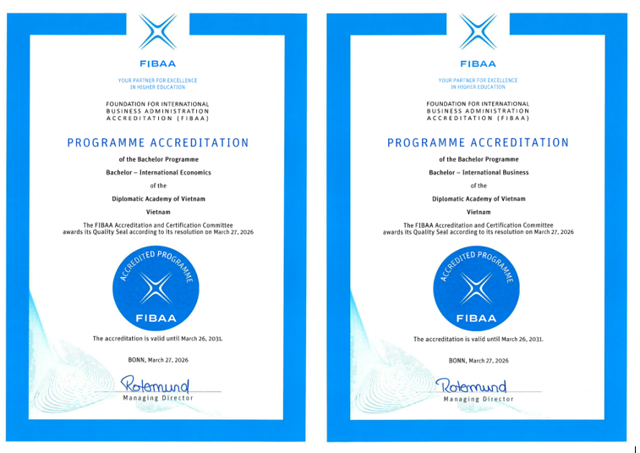
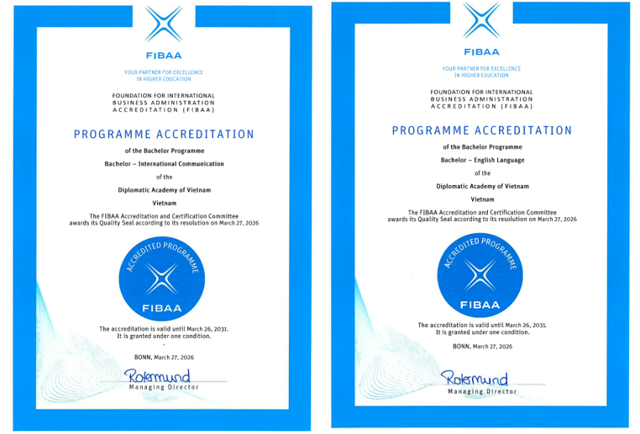
IBAA experts also highlighted a number of notable strengths of the programmes, with several aspects exceeding the required standards. These include their strong positioning within the national higher education landscape; an interdisciplinary and transdisciplinary approach to programme design; well-integrated international and foreign language components; coherent, practice-oriented teaching methods supported by academic and professional engagement activities; academically qualified staff with international experience; effective student support systems; and an active alumni network that strengthens links with the labour market.
FIBAA accreditation not only attests to the quality of the programmes but also provides tangible benefits to students. Enrolment in internationally accredited programmes allows students to engage with internationally standardised, practice-oriented curricula while developing key competencies, including foreign language proficiency, intercultural communication skills, and the ability to work across disciplines and cultural contexts.
Moreover, accreditation by a recognised international body enhances transparency and supports the recognition and transferability of academic credits. This, in turn, provides students with greater opportunities to pursue further studies abroad and to access a wider range of career prospects, both at home and internationally.
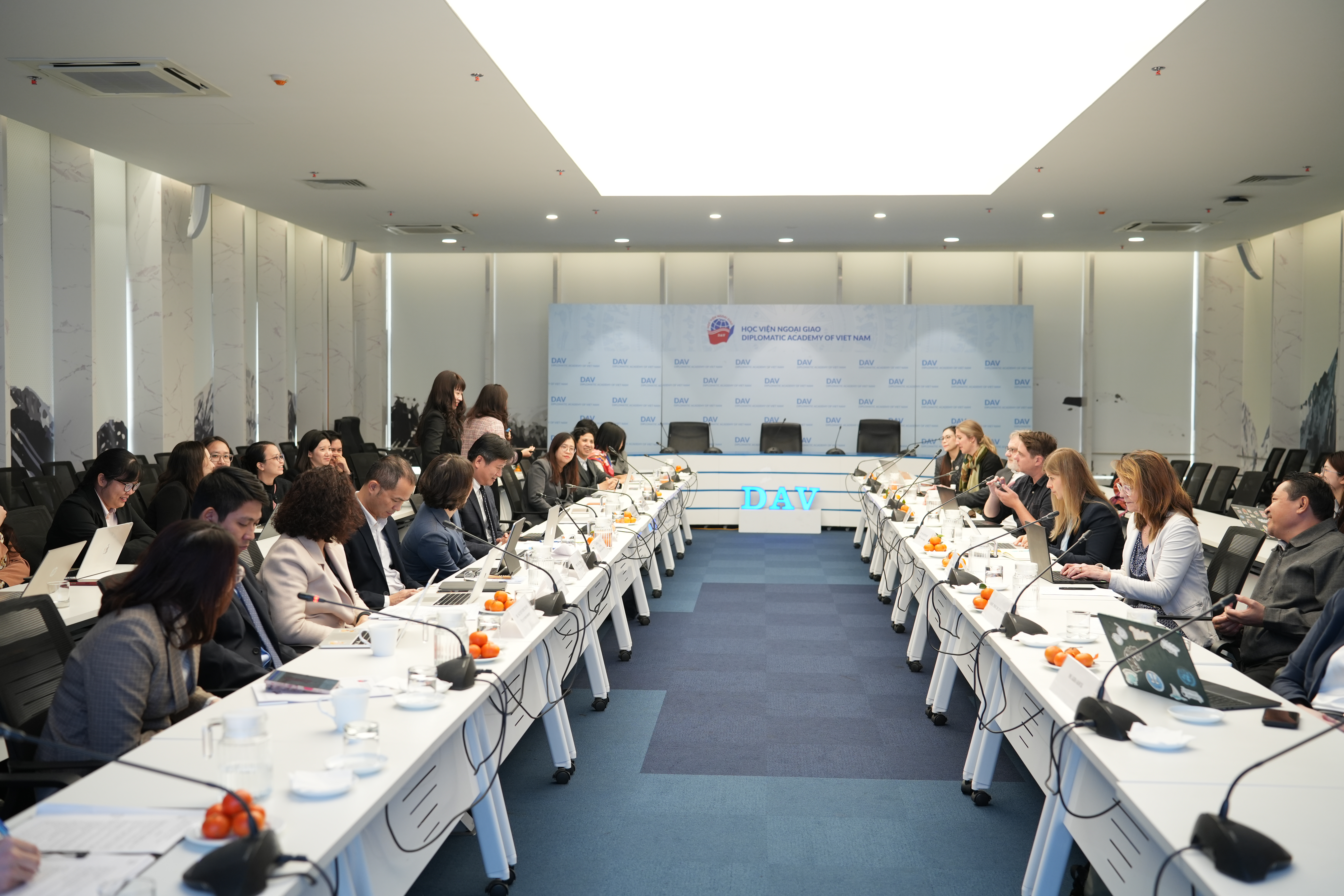
While this achievement represents a significant step forward, the DAV views international accreditation not as an endpoint, but as part of an ongoing process of continuous quality enhancement.
Building on this foundation, the DAV will continue to:
In the long term, the DAV aims to advance a model of higher education that not only meets international standards but also fosters academic exchange, dialogue, and cross-border cooperation./.





Copyright ® 2026 Học viện Ngoại giao - Diplomatic Academy of Vietnam | Điều kiện | Bảo mật